The blind spot in most B2B marketing budgets

Author: Stuart Dawson
Digital strategy
Graphic of person walking behind panelled screen creating texture

The blind spot in most B2B marketing budgets and how LinkedIn unlocks new opportunities for growth.

A few weeks ago I was reviewing a client’s marketing budget for 2027. Most of it went on paid search, paid social and SEO. Organic social sat at the bottom with a small allocation and a note that read “hard to measure.” We see this a lot, and when budgets tighten it’s often the first thing to go.

That made sense for a while. It doesn’t now.

So where have the buyers gone?

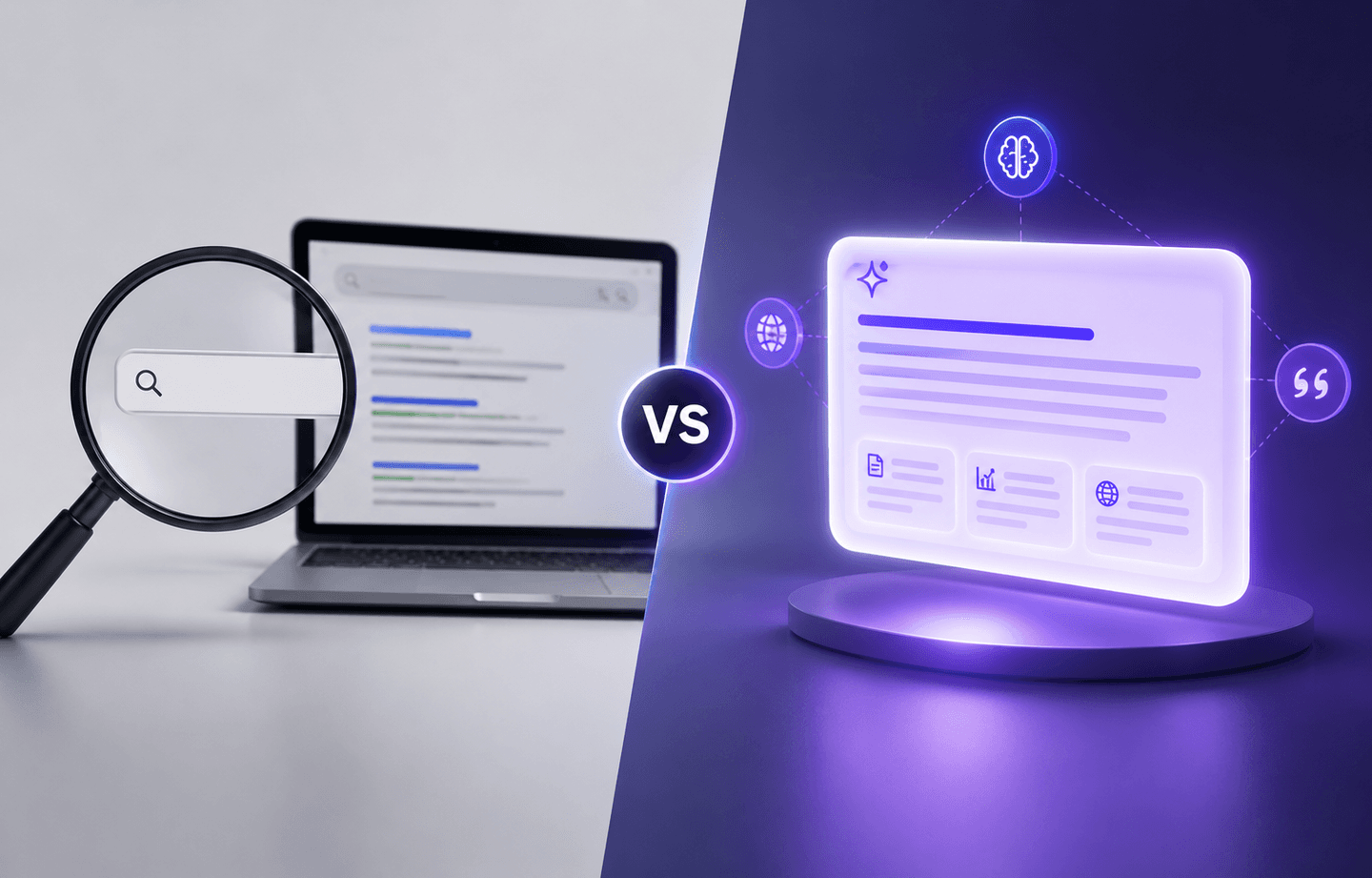
For more than 20 years, research started with Google: type in a few keywords, scan a page of links, build your own shortlist. That habit is changing fast. AI tools like ChatGPT, Claude, Gemini and Copilot now give one written answer that names a handful of suppliers and points to the sources it relied on.

According to 6sense, 94% of B2B buying groups use ChatGPT, Gemini or a similar tool before they ever speak to a salesperson. Forrester found B2B buyers adopting AI search up to three times faster than consumers.

In B2B the shortlist is the whole game. Research from LinkedIn’s B2B Institute, Google and Bain found 86% of buyers start with a “day one” list averaging just three brands, and 92% buy from it. If AI is shaping that list, the question isn’t whether you rank on Google. It’s whether you’re one of the three names AI puts in front of buyers before they’ve filled in a form.

Why this often gets measured wrong

Each channel tends to be judged on its own scorecard: paid on cost per lead and pipeline, SEO on rankings, organic social on reach and engagement. That stops working when one of the softer channels starts feeding the tools your buyers use to make decisions.

There’s a timing problem too. Dreamdata puts the average B2B sales cycle at 272 days, yet two thirds of marketers must justify spend monthly. Any channel whose value shows up in month six will always look weak on a monthly report.

What's actually sitting in that blind spot

When an AI tool answers a question, it draws on sources it trusts and often shows them as citations, a bit like footnotes. For B2B questions, LinkedIn is now the most cited source of all.

Profound’s analysis of 1.4 million AI citations found LinkedIn climbed from 11th to 5th among the websites ChatGPT cites most between November 2025 and February 2026. For professional B2B topics, it ranks first across the major platforms tested, including ChatGPT, Gemini, Google’s AI Overviews, Copilot and Perplexity.

For B2B brands there is no bigger citation source on the internet, yet in most budgets it sits inside the organic social line, the one most at risk of being cut. LinkedIn now shapes whether AI recommends you, supports how you show up in search and feeds lead generation. Invest in one discipline and see the benefit across several.

Why LinkedIn earns this position

Three things make LinkedIn attractive to AI. Identity: verified professional profiles tell an AI exactly who is speaking and what expertise they carry. Originality: roughly 95% of cited LinkedIn content is original rather than reshared. Format: useful, advice-led posts and articles get cited most. The content that builds a following is exactly what AI is looking for.

It also reaches the people who truly decide. LinkedIn and Bain’s research suggests 49% of decision-making authority sits with “hidden buyers”, the senior finance, IT and procurement people who rarely click an ad but can quietly veto a deal. Suppliers known across the whole buying group are up to 20 times more likely to be chosen than those known only to their main contact. They’re exactly the time-poor people who ask AI for a sense check.

Personal brand and company pages are not interchangeable

On ChatGPT and Google’s AI Mode, individuals account for around 59% of LinkedIn citations against 41% for company pages. Buyers, and the AI tools they consult, want reputational proof, and a respected leader sharing genuine expertise provides it in a way a logo rarely can. A serious plan needs your leaders and your company page working together.

Getting cited doesn’t require celebrity either. Plenty of cited posts come from authors with fewer than 500 followers, and roughly three quarters of cited authors post five or more times a month. Consistency beats reach. If your leadership team has been waiting for a bigger following, get on with it.

This isn't paid versus organic

None of this is an argument for cutting paid. Paid search captures people actively looking for what you sell, and paid social reliably reaches decision makers at scale. Cut either and you’ll feel it in the pipeline within a quarter.

The point is that they do different jobs. Paid buys you presence in the moment. Organic builds the body of evidence AI tools draw on when your buyer asks for a recommendation, and that evidence doesn’t switch off when the budget does. The best plans put paid behind leaders’ best performing posts and let organic engagement show which messages deserve budget.

Closing the blind spot

Every post your leadership team publishes now works twice: once with the people who see it in their feed, and again as a trusted source AI keeps surfacing for months, even years.

In practice, that means:

  • Publish under real names, not just the company page.
  • Write original, useful content and commit to consistency over virality.
  • Each month, ask ChatGPT, Perplexity and Gemini the questions your buyers ask and see whether you appear.
  • Add “AI” to your “how did you hear about us” form. You’ll be amazed how quickly it moves.

The shift is clear enough to act on, and those who move now will have a head start when everyone else wakes up. The blind spot itself isn’t typically due to a lack of investment. It’s a lack of joined up thinking. Fix that, and the smallest line on the budget sheet might turn out to be the most valuable.

Stuart Dawson

Managing Director

Stu is MD of J2X. His marketing career spans 20+ years of digital transformation from the explosion of Search and Social to the emergence of CRO and AI. He’s on a mission to cut through the noise and provide J2X clients with a more strategic approach to what they need; brand growth and revenue generation.

Get in touch